Handpans and drums · 5 min read
Buying a used gong or handpan: what to check
A used gong or handpan can save money, but dents, rust and tuning can cost it back. What to check, what new ones cost, and how returns and shipping work.
By Singing True. Last updated 2026-11-20.
In this guide
Buy used only if you can inspect the instrument or get a seller to show you every note and every inch of it. A used gong or handpan can cost less than new. A dent, rust or a drifted note can cost back more than you saved, and neither instrument is easy to ship back.
We have not inspected a used gong or handpan. For handpans we use two makers' guides, and both sell handpans, so treat their prices as opinions. For gongs we found no used-buying guide, so that checklist is general.
What new costs, as a reference
A used price only means something next to a new one. In our listings, read 2026-11-20:
- The Meinl Sensory handpan was $1,999.90 at Guitar Center, new. The page said open-box units were listed from $1,759.91. That is $239.99 below new, our subtraction.
- The Sela Melody handpan was $1,299.90 at Guitar Center, listed as factory sealed and brand new. The page said open-box units were offered at 10 percent off, which works out to $1,169.91 on that price, our math.
- The X8 Nova handpan was $249.99 with a bag and a stand.
- Gongs: a 24 inch gong alone was $604.95 at Sweetwater, and a 28 inch combo with a stand and a mallet was $1,125 at The Gong Shop. See the gong price page and the handpan price page.
The Meinl open-box gap is about 12 percent of the new price, our math. Count any retune or missing stand against a saving that size before you buy.
Where people buy used
Pures Music says used handpans turn up on online marketplaces, in Facebook groups and in handpan communities. Cosmos Handpan says established, moderated communities are lower risk, because scammers get flagged. It says local classifieds tend to bring cheap knockoffs and suggests meeting somewhere quiet where you can test the pan. It adds that marketplaces such as Reverb and eBay offer buyer protection that may not fully cover shipping damage.
We could not open Reverb's own protection pages, so check them yourself: the claim window, what counts as damaged, and who pays return freight. Retailers also list open-box units, as Guitar Center did above. An open-box item from a store that sells new gear is a different thing from a private sale.
Checking a used gong
We found no gong-specific buying guide. These points come from one gong maintenance blog and the general facts below.
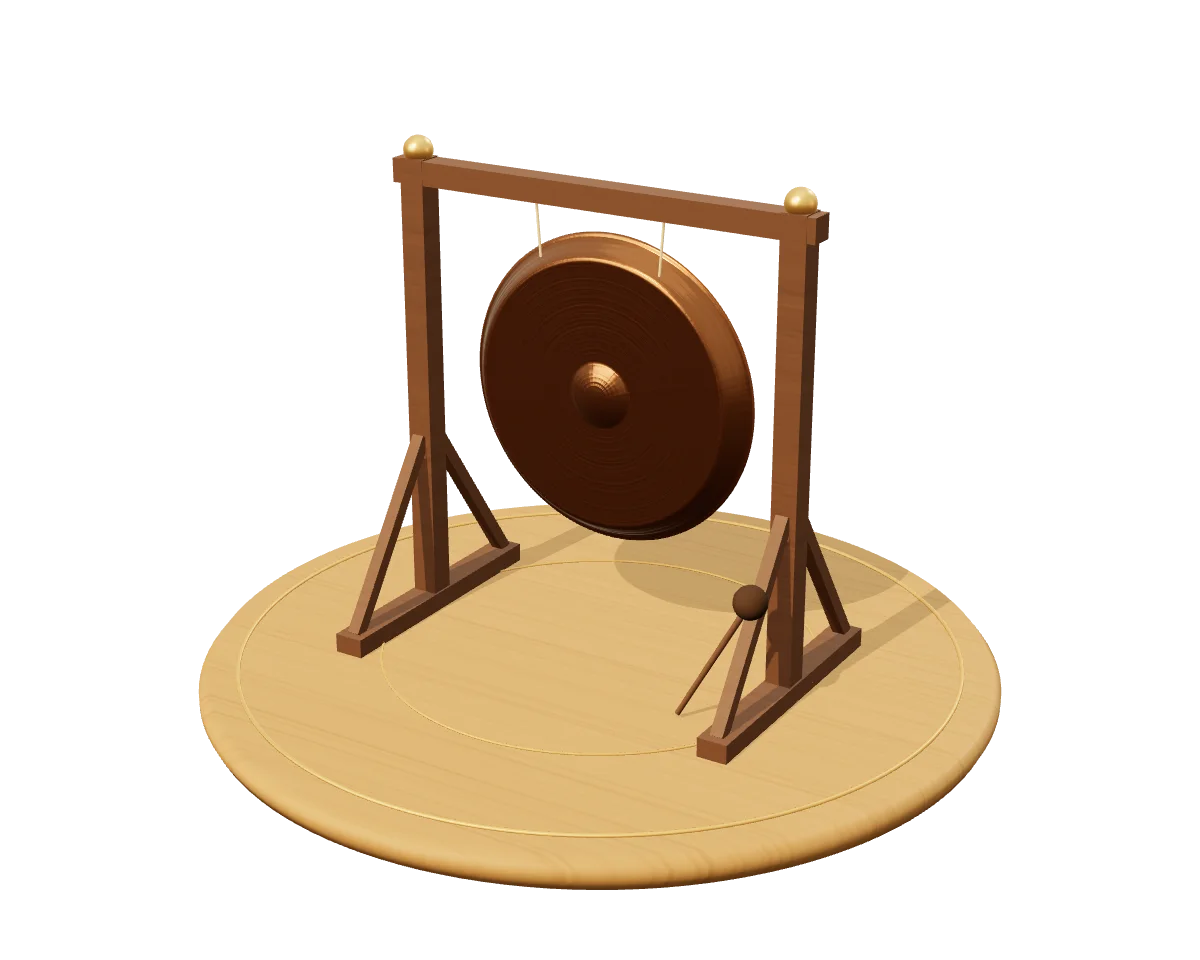
- Nicks, dents and cracks. The blog says travel can leave gongs "nicked or dented" and that this can lead to further problems like cracks. A dent may or may not matter, depending on whether it affects the sound or the playing.
- Mounting holes. Wikipedia says a suspended gong hangs by a cord through holes near the top of the rim. Look closely there. This is our suggestion, not a gong maker's rule.
- The black and polished areas. Wikipedia says a chau gong's center spot and rim keep a black coating while the rest is polished. If a photo looks different, ask why.
- Hammering and surface. Ask for close photos of the face and the rim in strong light.
- Anything you cannot judge. The blog says to consult someone qualified.
- What is included. A stand and mallet may be sold separately. See the stand guide and the mallet guide.
For the new-gong side, see the gong buying guide.
Checking a used handpan
This is the list from the Cosmos Handpan and Pures Music guides.
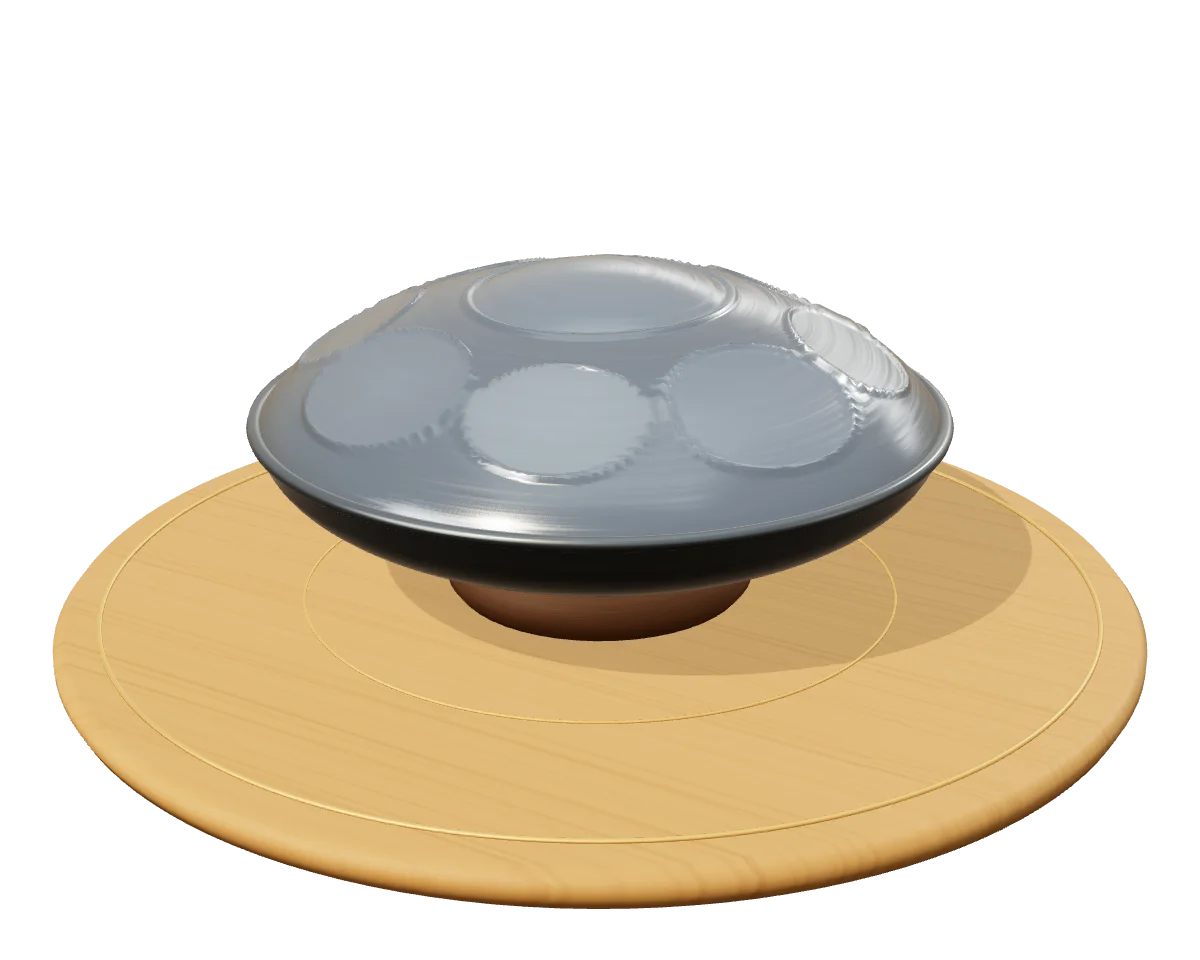
- Dents. Look at the dome at eye level under a strong light. Cosmos says any dent, even a small one, suggests an impact, and that a dent near the edge of a note field can permanently damage that note's tuning.
- Tuning. For each note, strike the center for the fundamental, then the long and short axes of the dimple for the octave and the compound fifth. Cosmos says all three must line up. Cosmos says to walk away if notes wobble excessively or if other notes ring dissonantly when you strike the ding.
- Rust. Inspect the port lip and the edges of the note fields. Cosmos says deep pitting changes the steel's thickness and can ruin the tuning for good, while light surface rust may be treatable with oil.
- Steel type. Ask if it is nitrided, stainless or ember steel, since that decides how much care it needs. Pures Music says stainless is rust-resistant and nitrided steel is naturally resistant, and still suggests a light coat of oil.
- History. Pures Music suggests asking about tuning, repairs and maintenance.
- Retuning. Pures Music says it is specialized work, best left to an experienced maker or tuner. Cosmos estimates $200 to $500 for a neglected pan, plus shipping. That is its own estimate.
- Price floor. Cosmos says anything under $400 is likely a mass-produced, untunable replica. Our $249.99 X8 Nova would fall under that line. That is a seller's claim, so read buyer reviews before drawing a conclusion.
Returns and shipping
- Ask for a proof video. Cosmos says to ask for a clear video of the seller playing every note, saying your name and the date, because some sellers advertise instruments they do not own.
- Packing. Cosmos says a handpan should not ship in a standard box with bubble wrap. It recommends a hard-shell case suspended inside a double-walled box. For a gong, the maintenance blog says to use quality cases or bags and padding.
- After it arrives. Cosmos says to test every note again, since courier impacts can throw outer notes out of alignment. Do this the day it arrives, before any return window closes.
- Written terms. Get the return policy, who pays return freight and the condition in writing before you pay.
Where people overpay
- Paying near-new money for a used handpan without checking the tuning.
- Skipping the retune cost.
- Buying a gong without asking what comes with it.
If you are weighing a tongue drum as a cheaper start, read handpan vs tongue drum: which to buy.
Frequently asked questions
Is a used handpan cheaper than a new one?
Usually, but how much depends on the seller. Guitar Center listed open-box Meinl handpans from $1,759.91 against a $1,999.90 new price, a $239.99 gap by our subtraction. A handpan maker's blog guesses that high-end used pans hold about $1,500 to $2,500, and gives no data for that.
Can I retune a used handpan myself?
Pures Music says retuning is specialized work best left to an experienced maker or tuner. Cosmos Handpan, which sells new pans, estimates a neglected pan costs $200 to $500 to retune plus shipping.
What damage should I look for on a used gong?
Look for nicks, dents and cracks. One gong maintenance blog says travel damage like nicks and dents can lead to further problems like cracks. We did not find a gong-specific used-buying guide, so ask a seller or a gong maker about anything you are unsure of.
How do I check a handpan's tuning before buying?
Cosmos Handpan suggests striking the center of each note for its fundamental, then the long and short axes of the dimple for the octave and the compound fifth. It says all three must line up. Ask for a video of every note, and use a tuner app yourself.