Chimes and forks · 5 min read
Tuning fork buying guide: 128 Hz, sets and prices
What a tuning fork is, why 128 Hz is everywhere, and what three listings cost, from $59.99 for one fork to $399.90 for a set of seven.
By Singing True. Last updated 2026-11-20.
In this guide
A tuning fork is a piece of metal that rings at one pitch, and the pitch is printed on it. If a listing does not state the frequency in Hz, do not buy it. We read three listings, priced from $59.99 for one fork to $399.90 for a set of seven, and the main thing to check is what the page actually tells you.
We have not played these forks. We read the seller pages and a few reference pages on 2026-11-20. Several of the pages make claims about what forks do for people. We do not repeat those claims, and the pages we read did not link evidence for them. This guide sticks to what the forks are and what they cost.
What a tuning fork is
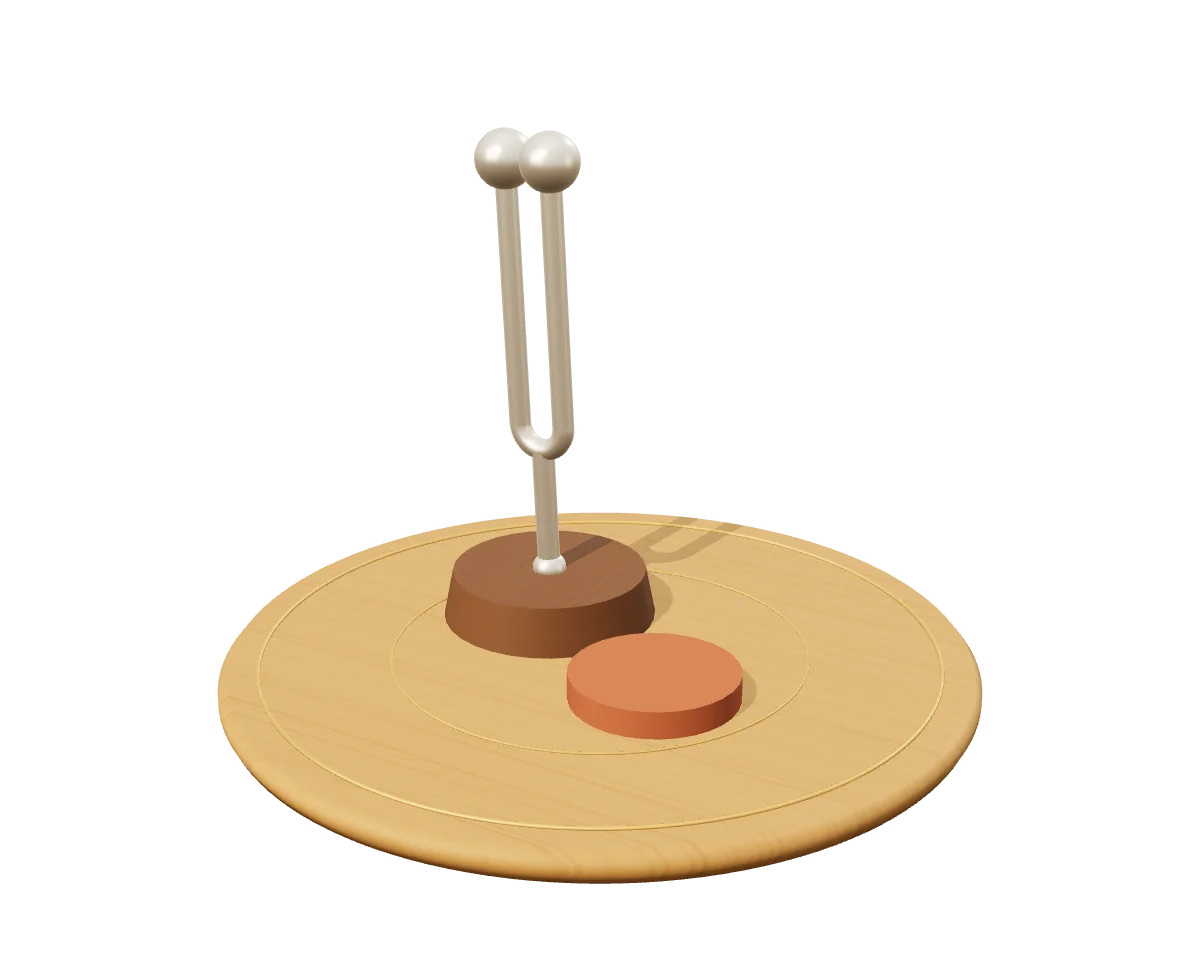
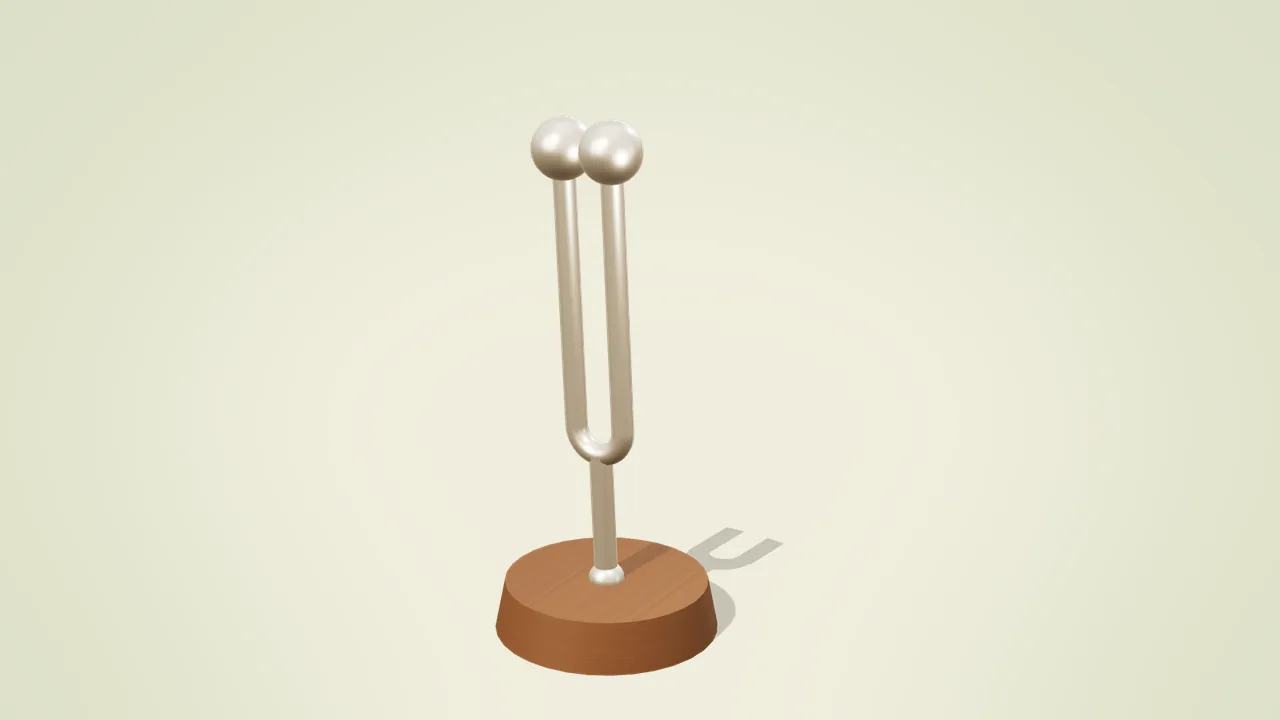
Wikipedia describes a tuning fork as a fork-shaped acoustic resonator, usually steel. When it is struck, it vibrates at a fixed pitch that depends on the length and mass of its two prongs. The stem stays nearly still, so you can hold it without damping the sound. Because the overtones fade quickly, you get a nearly pure tone.
In open air a fork is quiet. Wikipedia says pressing the stem against a sound board, or against bone behind the ear or on the teeth, makes it much louder. Wikipedia calls A = 440 Hz the most common modern standard for tuning.
Why 128 Hz keeps showing up
Each octave up doubles a note's frequency, so 128 Hz sits one octave below 256 Hz and two below 512 Hz. Wikipedia's page on scientific pitch says that standard puts middle C at 256 Hz, which makes the C an octave lower 128 Hz. Meinl prints "128 Hz/C3" on its Flower of Life fork, and its page prints the tuning reference as "A4/a' 440 Hz - 430.54 Hz".
A second reason is that forks have long had other uses. Wikipedia lists C = 128 Hz as the lowest of the common medical forks, and C = 512 Hz forks as the type used for hearing tests. We cannot tell you why each seller chose 128 Hz, and we will not guess.
Weighted and unweighted
Sellers use "weighted" in different ways, so ask what it means on the page you are reading. One seller says its weighted fork is nickel-plated steel with a brushed finish and square edges. It says the fork has no round weights at the top, uses more steel, and has a synthetic cork handle. It contrasts that with a "classic" fork in polished chrome steel with rounded edges.
Every performance claim on that page is the seller's own, including that the weighted fork rings longer and needs striking less often. We did not find a neutral source that tests the two designs.
The Meinl Flower of Life page and the Sunreed page we read did not say whether the fork is weighted. That is a question to put to the seller.
The three listings we read
Meinl Flower of Life, 128 Hz/C3, $59.99 at Sweetwater. Meinl's shop page lists nickel-plated steel, 210 mm (8.3 inches) long, 88 g (3.1 oz), with a cork handle, made in Germany. It recommends a separate mallet, sold on its own page, and does not say whether one comes in the box.
Sunreed Foundation Starter set, $120. Three forks, which is $40 each if you divide. Sunreed's page says they are a high-grade aluminum alloy, about 8 to 9 inches long, about 4 to 5 oz, made in the USA. It describes the three forks by purpose and does not give exact frequencies. The set also includes access to a micro-course and an online community, per the page. When we looked at the page, it showed the set as "Unavailable".
Meinl Planetary Tuned set of seven, $399.90 at Sweetwater. Seven nickel-plated steel forks, which is about $57.13 each when you divide. Meinl's shop page for this set lists a holder, a net weight of 710 g, and these frequencies: 194.18, 210.42, 126.22, 136.10, 141.27, 221.23 and 172.06 Hz. None is 128 Hz.
See the current tuning fork prices for the list.
What sellers call a chakra set
Sellers label a seven-fork set with the seven chakra names, one fork per name. Meinl's page names root, sacral, solar plexus, heart, throat, brow and crown. It says the tunings follow Hans Cousto's calculations from the sun, moon and planets. We cannot check that, and we do not endorse the labels.
One plain observation from the numbers. Meinl's page gives the heart fork (136.10 Hz) and the throat fork (141.27 Hz) the same note name, C#3. They are about 64 cents apart, more than half a semitone. Read the note names on a page as rounded, and go by the Hz.
What a fair price looks like
Our three readings are too few to set a range. A single Meinl fork was $59.99. Seven forks of one kind at that price would be $419.93, so the $399.90 set costs $20.03 less than seven singles, but the set's forks are not the same tuning, so the comparison is rough. The Sunreed set was $120 for three, but we could not confirm the page shows it for sale.
A price per fork is only useful if the forks are the same kind. Compare the material, the length, the weight and whether a mallet is included.
What to check before you pay
- The frequency in Hz for every fork, not only a name or a color.
- The tuning reference. Meinl's page prints "A4/a' 440 Hz - 430.54 Hz". A fork tuned to a different reference will not match instruments tuned to A = 440 Hz.
- Weighted or not, and what the seller means.
- The material and weight. Meinl lists steel at 88 g. Sunreed lists aluminum at 4 to 5 oz.
- A mallet. Check whether one is included.
- Availability. One page showed a set as unavailable.
- Return terms. We did not read them for these listings.
Common ways people overpay
- Paying more for a name. "Flower of Life" and "Foundation" are product names. They do not change the frequency.
- Buying a set for one note. If you want a single 128 Hz fork, you do not need seven.
- Buying a set before you know the tuning. The seven forks in Meinl's set follow the values printed on its page, and none of them is 128 Hz.
What else you need
A mallet, unless one is included, and a place to keep the fork. A seven-fork set with a holder weighs 710 g, so plan where it sits. If you are weighing a fork against a bowl as your first instrument, read how to choose a singing bowl note and size and our first sound bath kit on a budget. The 432 Hz versus 440 Hz guide covers why the reference matters.
Frequently asked questions
What is a tuning fork?
Wikipedia describes it as a fork-shaped metal resonator that vibrates at a fixed pitch set by the length and mass of its two prongs. It gives a nearly pure tone, and it is quiet in open air.
Why do so many forks say 128 Hz?
128 Hz is the note C3 when middle C is set to 256 Hz, a standard called scientific pitch. Meinl prints 128 Hz/C3 on its Flower of Life fork. Wikipedia also lists 128 Hz as the lowest of the common forks used in clinical exams. We cannot say why each seller chose it.
What does weighted mean?
It depends on the seller. One seller describes its weighted fork as a nickel-plated steel fork with extra steel and no round weights. The Meinl and Sunreed pages we read did not say whether their forks are weighted, so ask.
How much does a tuning fork cost?
We read a single Meinl 128 Hz fork at $59.99, a Sunreed set of three at $120 and a Meinl set of seven at $399.90. All three prices were seen on 2026-11-20.